Fortune found in fragrant isles, Banda Neira.


At the eastern reaches of the Indonesian Archipelago, Banda is a group of 10 small islands that are part of the province of Maluku, once known as the Spice Islands. Getting to Banda has never been easy. Sailors berthing here from Europe would fall on their knees and give thanks to God for sparing them from scurvy, dysentery, malaria and pirates; but it was worth it. They were halfway to a fortune.
From the quay, I pass through the grounds of the Hotel Maulana and on to the main street of Banda Neira, the largest town, which threads past a mosque and the bazaar and on to a street lined with buildings set back behind deep verandahs with shuttered doors and windows. Further back, under the eye of the hilltop Belgica Fortress, is a scattering of villas once owned by the perkenier, the Dutch landholders. Some have been handsomely restored but most are falling prey to time, mould and tropical vegetation. It's the classic castaway island - languid and serene - and grafted with a history that seems as much fantasy as fact.
Banda is famous as the original home of nutmeg and, from the Middle Ages, nutmeg was the ultimate prize of the spice trade, a nut to steal men's souls. As well as a condiment, nutmeg was said to ward off bubonic plague, prevent sore throats, scarlet fever and ailments of the spleen. It was used to treat memory loss, dizziness, epilepsy, to guard against broken bones and - naturally - to increase a man's potency. In Europe, nutmeg sold for 300 times its purchase price in Banda, the only place nutmeg grew. Whoever could control Banda and its nutmeg trade was guaranteed a fortune.
After passing through the hands of Chinese, Arab and Portuguese merchants, the nutmeg trade fell into the hands of the Dutch when they grabbed Banda and set about creating a monopoly. Their efforts were frustrated for many years by the British East India Company, which had occupied and fortified the nearby island of Run, a western member of the Banda Islands group and another source of nutmeg. After protracted sieges, battles, intrigues and massacres, the Dutch finally gained control of Run when they traded it for a small, unproductive island in North America, which they called New Amsterdam, now known as Manhattan.
The Dutch East India Company eventually petered out, replaced by the Dutch colonial administration, which ended when Indonesia gained its independence after World War II. But Banda is still strewn with reminders of its former rulers.
Set into the floor of the Dutch Old Church are the headstones of settlers who died in the service of the Dutch East India Company. The beach in front of the former Dutch administration buildings is littered with Chinese porcelain, wine bottles, remnants of bowls, plates, Dutch clay pipes and cups that broke during the sea voyage and were thrown overboard when the cargo was landed.
Most poignant of all the colonial mementoes is the inscription scratched into a window pane in one of the former Dutch buildings along the waterfront. It recalls the melancholy end of a homesick officer who used his diamond ring to etch his final thoughts into the glass, telling his family how much he loved them, before hanging himself.
The Dutch influence even extends to Banda's shopping scene. If you've ever wanted a serving plate featuring the coat of arms of the Dutch East India Company, a mahogany wall cabinet, a blunderbuss or a smallish cannon, the antiques shops of Banda Neira have just the thing.
Nutmeg remains an important cash crop in Banda and much of the island is still covered in nutmeg trees, which grow only in hot and humid places with pure air, abundant rainfall and shade, which comes from the giant canopy of wild almond trees. When the yellow-green fruit splits, the mahogany-coloured kernel of the nutmeg appears, sheathed in a fleshy, crimson web of mace.
However, there is much more to the islands of Banda than memories and agriculture.
Dominating the landscape is the massive volcanic cone of Gunung Api, which rumbles into action at least once every century and particularly at times of historic change for the islanders. Its most recent eruption, in 1988, killed three people, destroyed more than 300 houses and filled the sky with ash for days. Climbing the scree-covered slopes to peer into the cone of the volcano is not for the faint-hearted but, provided you start in the cool air shortly after dawn, it's well worth the effort to reach the 666-metre summit, where the views are sensational.
Diving and snorkelling around Banda varies from merely sensational to off-the-dial awesome. These waters are part of the Bird's Head Seascape, a vast marine zone at the absolute pinnacle of underwater biodiversity, sometimes described as a species factory. Unknown to marine biologists until the 1990s, it's blown all previous counts of marine life out of the water. Pelagic species are especially abundant, including hammerhead sharks, rays and tuna. Sea snakes are common and one of the local specialties is a large population of the gorgeous mandarinfish, a close relative of the LSD-fish, so named because of its psychedelic colouring.
Banda is a perfect fit for a certain kind of traveller with a taste for hot, dramatically beautiful and eccentric places that are off the beaten track, although you have to wonder how long it will remain under wraps. While he was showing me around the old Dutch buildings by the waterfront, my guide pointed out a crumbling colonial relic that has recently been acquired by Adrian Zecha, the creator of Amanresorts. In a world where the taste for the exotic runs to ever-more remote parts of the globe, sleepy little Banda might be on the radar once again.
___________________________________________________________________________
Trip notes
Getting there
The most reliable way to get to Banda is via the Pelni Line ships (pelni.com), which travel from Ambon to Banda at least once a week. The fare is about $50 a person for cabin class. Garuda Indonesia (garuda-indonesia.com) and Lion Air (lionair.co.id) operate services between Jakarta and Ambon.
Staying there
Hotel Maulana is a three-star establishment on the waterfront and offers the most comfortable accommodation. Doubles cost about $50. Several guest houses offer an atmospheric alternative, including Mawar Gethouse, which charges about $17 for a double room. +62910 21083 Or contact me if you need it
Me, by Email and Mobile, (routertelemedia@gmail.com /+6285343060496 (IPUL)
Eating there
- The Delfika Cafe is one of the best of the local restaurants, open for breakfast, lunch and dinner. +62 91 21 027.
- Namasawar is a pleasant, local-style restaurant that serves seafood. +62 91 21 136.
See + do
Spice Island Divers is a land-based dive centre that serves Banda and its surroundings. The business can also help with transport and accommodation needs. divingbanda.com.
Any hotel will provide a guide and transport for tours, which include climbing the volcano, visiting a nutmeg plantation and snorkelling trips.
Several shops in Banda Neira sell pearls from nearby farms.
More information
Search for "Banda" at indonesia.travel. See smarttraveller.gov.au, for advice from the federal government.
or contact me
Me by Email or Mobile, (routertelemedia@gmail.com /+6285343060496 (IPUL)
Local secret
THE cakalele dance is common throughout Indonesia's eastern islands. The dance has many regional variations, yet in Banda it has a special poignancy.
The story told in Banda's cakalele comes from the terrible fate the islanders suffered at the hands of the Dutch, when most males over the age of 15 were butchered and the rest either enslaved or deported and replaced by more pliable settlers from the island of Java.
Dressed in elaborate tunics and helmets that date to those of Portuguese soldiers in the 16th-century, five dancers perform around bamboo poles with metal flowers in their mouths, because the fate the islanders suffered was too terrible for words.
The cakalele is performed for important visitors and during ceremonies and it's well worth the effort and the expense if you can persuade the dancers to put on a performance for you.
banda-naira.blogspot.com
 RSS Feed (xml)


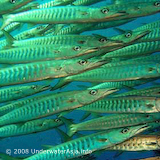 The seven main islands and numerous smaller islets that make up the Banda Islands have some truly excellent diving. Palau Ai has plunging walls and excellent pelagics, including numerous species of larger shark. Skaru is a small atoll just off the main Hatta Island that often has a bewildering profusion of fish & colours, including huge schools of Snapper & Fusliers. Pelagic action is also common here and the nutrient rich waters feed majestic corals & sponges. The pinnacles around Batu Kapal make for an excellent dive too. The main island of Banda Neira is a great place to find mating Mandarinfish at dusk, which are reportedly far less bashful than at other locations. The reefs fringing Gunung Api, with their tapestry of delicate table corals, have been a revelation to scientists. Gunung Api is an active volcano that last erupted in 1988, covering the reefs in lava and destroying everything in their path. Miraculously though, the reefs have recovered faster than experts ever thought possible and the area is now home to some of the most impressive hard coral structures that you will find anywhere in the world. This site has a huge concentration of Banded & Olive Sea Snakes too. There is also superb diving elsewhere in the Banda Sea. The 5 small atolls of Lucipara are a turtle nesting ground and have excellent diving, with walls plunging down to over a kilometre. There are occasional sightings of Mola Molas, or Sunfish here. Just off the eastern coast of Seram island at the northern end of the Banda Sea is Koon Island. Despite strong currents and lower visibility, this site is a popular very Liveaboard stop. In addition to the profusion of fish life here, numerous sharks & even whales are known to cruise, including large Killer Whales.
  Dive
Dive Travel
 Stay
Stay


